








Tomorrow’s solutions! With one click.
Medical components & hygienic products
PTFE yarn for sutures and more
PTFE yarns, films, tapes and tubes for permanent implants
On the body - in the body: biocompatible, durable, versatile
The human body – a miracle of nature. As much as it is capable of, it is also vulnerable. With its innovative methods, medicine has achieved and continues to achieve great things in terms of both healing and prophylaxis. In doing so, it depends on the quality of the basic products for its technologies and methods.
This is where Lenzing Plastics comes in. With our PTFE yarns, films, tapes and tubes, we provide the basis for extremely smooth, soft and above all biocompatible textiles, surgical sutures, heart valves, covered stents and various special solutions.
Lenzing PROFILEN® PTFE: monofilament yarns in use for quality of life and health
Lenzing PROFILEN® yarns, films, tapes and tubes from Lenzing Plastics are made of 100 percent pure PTFE (polytetrafluoroethylene). This modern high-performance plastic is making a splash in many areas of application. In medicine, however, it is particularly valuable. Whether for the manufacture of heart valves, as a suture material for dental surgery, for the production of medical textiles, wound dressings, etc., or for numerous special applications – components made of PTFE are proving their versatility and positive properties in many areas essential to health.
Lenzing PROFILEN® PTFE yarns, tubes and films from Lenzing Plastics are proving themselves above all as
- Compression tapes for various minimally invasive implants
- Membrane for laminates in and on the body
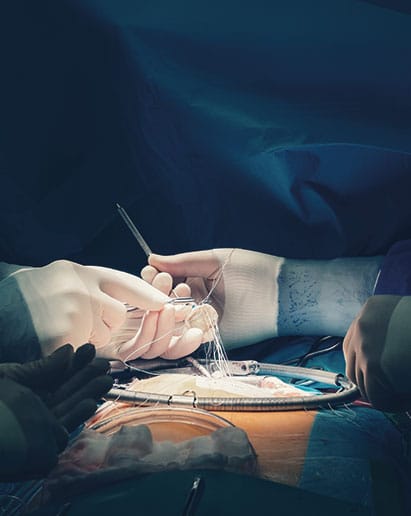
Yarns for heart valves
Material for artificial heart valves: Lenzing PROFILEN® PTFE yarns for your heart valve manufacturing: reliable and durable
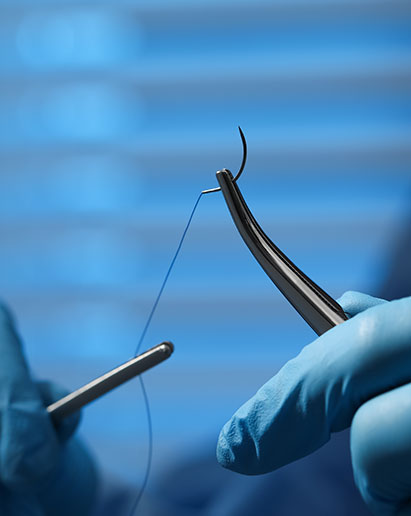
PTFE suture material
Monofilament yarns for PTFE sutures for various applications. Extremely smooth and biocompatible.
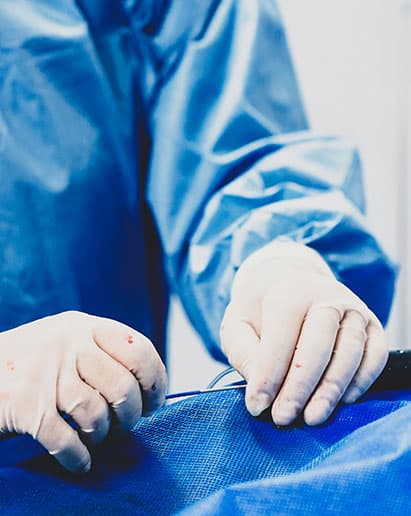
ePTFE Tube and Stent Covering
Strong in the longitudinal direction, highly expandable: expanded PTFE tubing not only as a perfect sheathing for stents.
PTFE films and tapes
Does not stick, does not fuse: biocompatible Lenzing PROFILEN® PTFE film and tapes for demanding medical devices.
Sutures for surgery - performance without compromise
One of the major areas of application for Lenzing PROFILEN® PTFE from Lenzing Plastics is dental surgery and the manufacture of implants, especially heart valves. Dental surgery in particular appreciates Lenzing PROFILEN® PTFE as a suture material because of its very smooth and soft surface. This means that hardly any tissue grows into the yarn, and when the thread is removed, there is little disturbance to human tissue. Since PTFE is also completely hydrophobic, germs find an extremely unfavorable environment for growth. Patients, on the other hand, enjoy the softness and thus the low pain caused by friction. In the cardiovascular field, PTFE proves its worth due to its extreme durability, with no degradation reactions in the polymer even over a very long time and, of course, its anti-adhesive property.

ISO 13485
certification
certification
Proven quality in design, manufacturing and quality of medical intermediate products

Top supplier
with experience
with experience
Supplier of class 3 medical products and the market leader in the heart valve sector

Global
customer network
customer network
Appreciated domestically and internationally, and approved for many customer products
Individual applications for Lenzing PROFILEN® PTFE components
Would you also like to give your medical product made of PTFE special properties to open up a new customer base or to stand out from the competition? Do you have innovative ideas that you would like to implement with components made of PTFE? Talk to us! We are open to your challenge!
Frequently Asked Questions
What are the advantages of PTFE sutures compared with other suture materials?
PTFE sutures are biocompatible, chemically inert, and non-absorbable. Their soft, monofilament structure provides a smooth surface and low friction during tissue passage. As a result, PTFE sutures can help reduce tissue irritation and bacterial adhesion. Additional benefits include long-term suture stability and reliable knot security.
Which surgical applications are PTFE sutures suitable for?
PTFE sutures are particularly suitable for implantology, periodontal surgery, oral surgery, vascular surgery, and cardiac surgery. They can also be used in bone and soft-tissue grafting and in other applications requiring a biocompatible, non-absorbable suture. Suitability for a specific procedure depends on the application and product specification.
What is ePTFE, and why is it suitable for medical applications such as stent coverings?
ePTFE stands for expanded polytetrafluoroethylene. This high-performance polymer has a characteristic porous microstructure and combines biocompatibility, chemical inertness, flexibility, and low friction. These properties make ePTFE suitable for stent coverings and other implantable components. Depending on the product design, it can help limit unwanted tissue ingrowth and contribute to the medical device’s mechanical durability.
Which medical applications are Lenzing Plastics ePTFE tubes suitable for?
Lenzing Plastics ePTFE tubes can be used as coverings for peripheral, coronary, and aortic stents. Other potential applications include implants, catheters, and components for minimally invasive medical devices. The material is particularly suitable for applications requiring biocompatibility, flexibility, chemical resistance, and long-term stability.
How long do ePTFE tubes last in the body, and what test evidence is available?
ePTFE offers high chemical and mechanical long-term stability. However, the actual service life of an ePTFE tube in the body depends on its design, intended application, operating conditions, and the medical device in which it is used. Its durability can be evaluated through accelerated aging, mechanical testing, and application-specific validation. Product-specific test reports and supporting documentation should be discussed upon request or as part of the relevant development project.
Are PTFE sutures safe for patients, and how long do they last in applications such as artificial heart valves?
PTFE sutures are biocompatible, chemically inert, and non-absorbable. They are used in cardiac and vascular surgery and can retain their mechanical properties over the long term. However, their safety and service life in an artificial heart valve depend on the specific suture, medical device, surgical technique, and clinical application. Product-specific approval, validation, and intended use must therefore always be considered.
Which medical components does Lenzing Plastics offer?
Lenzing Plastics develops and manufactures PTFE yarns, PTFE threads, PTFE films, and ePTFE tubes for medical applications. These components can be used in stents, implants, surgical sutures, catheters, and other medical devices. Products can be developed according to the technical and regulatory requirements of the specific application.
Does Lenzing Plastics offer customized solutions and custom-made components?
Yes. Lenzing Plastics works with its customers to develop customized PTFE and ePTFE components for medical applications. Material properties, dimensions, geometry, and packaging can be adapted to specific customer requirements. The aim is to provide a solution precisely aligned with the technical, quality, and application requirements of the medical device.
What are the advantages of PTFE and ePTFE components in medical applications?
PTFE and ePTFE components combine biocompatibility, chemical inertness, low friction, and high long-term stability. Depending on their design, they can also offer high flexibility and be adapted to different geometries and medical applications. This makes them suitable for demanding medical devices requiring material durability, reliability, and minimal interaction with body tissue.
What are the advantages of PTFE-laminated hernia meshes compared with pure PP meshes?
PTFE-laminated hernia meshes combine a polypropylene (PP) mesh with a PTFE layer on one side. The smooth PTFE surface forms a barrier between the implant and visceral tissue and can therefore help reduce unwanted tissue adhesion. At the same time, the textile structure of the PP mesh is retained on the opposite side. Suitability depends on the design and intended use of the medical device.
How can PTFE stent coverings for large diameters be manufactured?
Large-diameter stent frames can be wrapped and covered with LD-PTFE tapes or woven PTFE fabrics. The fabrics are manufactured from particularly fine PTFE yarns supplied by Lenzing Plastics. This production method allows the covering to be adapted to the geometry, diameter, and technical requirements of the specific stent.
How can PTFE yarns and threads from Lenzing Plastics be processed into medical textiles?
PTFE yarns and threads from Lenzing Plastics can be processed into woven, knitted, and braided structures for medical textiles. Depending on the production method, these textile structures can offer different levels of flexibility, strength, porosity, and geometric complexity. This allows the material to be adapted to various medical applications and product specifications.
What are the advantages of PTFE film pledgets compared with PTFE felt pledgets?
PTFE film pledgets have a smooth, non-fibrous surface. Unlike PTFE felt, they therefore present no risk of individual felt fibres being released from the material structure. The closed film surface also provides fewer sites where particles and contaminants can accumulate. Depending on the manufacturing process, PTFE film may additionally be processed without the bleaching steps required for some felt materials.
 Lenzing Plastics